
Abstract: Compressed Natural Gas (CNG) and Liquefied Petroleum Gas (LPG) vehicles serve as a cost‑effective transitional mobility solution for global high‑mileage fleets amid uneven electric‑vehicle infrastructure roll‑out. This article analyses global market size, regional dynamics, driving/restraining factors, and core pain‑points plaguing the overseas aftermarket retrofit segment. It provides actionable technical, business and regulatory strategies to mitigate retrofit risks, together with outlook toward 2032. Data are sourced from industry database and cross‑validated with regional market intelligence reports.
1. Executive Summary
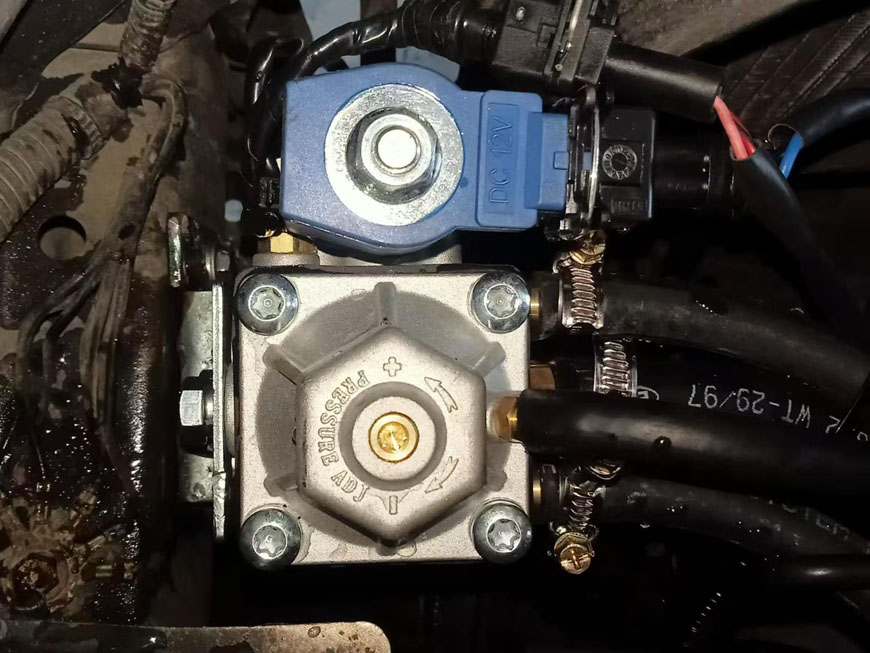
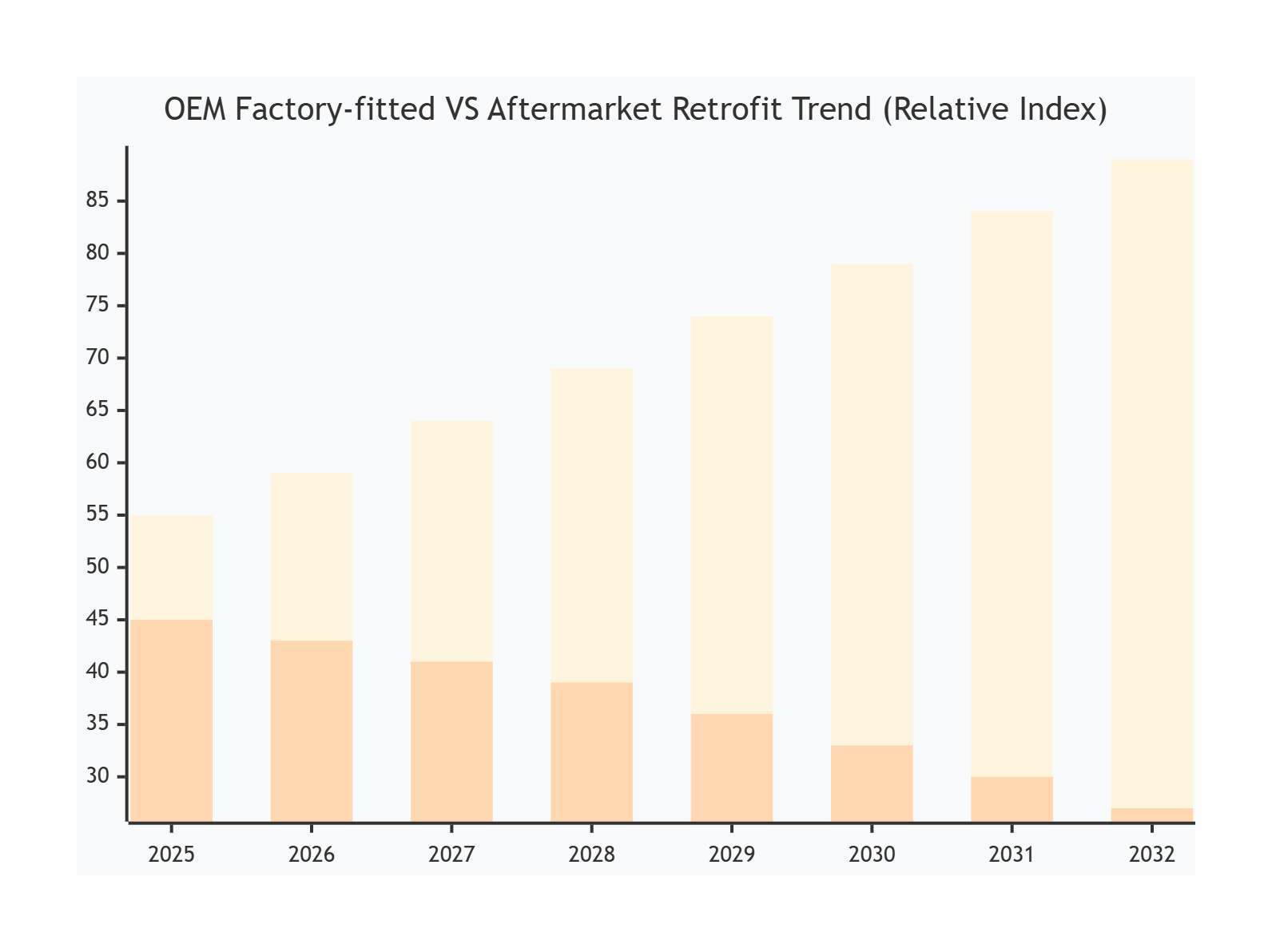
The global CNG & LPG vehicle market reached CNY 44.247 billion in 2025, and is projected to expand at a compound annual growth rate (CAGR) of 10.36%, hitting CNY 88.213 billion by 2032. The Asia‑Pacific region dominates, with China contributing CNY 11.456 billion of market revenue in 2025. While OEM factory‑fitted gaseous‑fuel vehicles gain traction, aftermarket retrofitting remains a high‑growth channel across Africa, Latin America, South‑West Asia and the Middle East for legacy gasoline‑diesel vehicle parc.
Nevertheless, unstandardized retrofit kits, inconsistent cross‑border safety codes, informal workshop installation, warranty voidance and inadequate post‑sales inspection severely hinder market potential. Informal retrofits generate safety hazards and erode end‑user confidence, even though retrofitting delivers attractive payback periods for high‑mileage taxis, delivery vans and minibus fleets.
This paper identifies retrofit bottlenecks and proposes industry‑level solutions for component suppliers, system integrators and fleet operators.
2. Global Market Size & Historical‑Forecast Trends
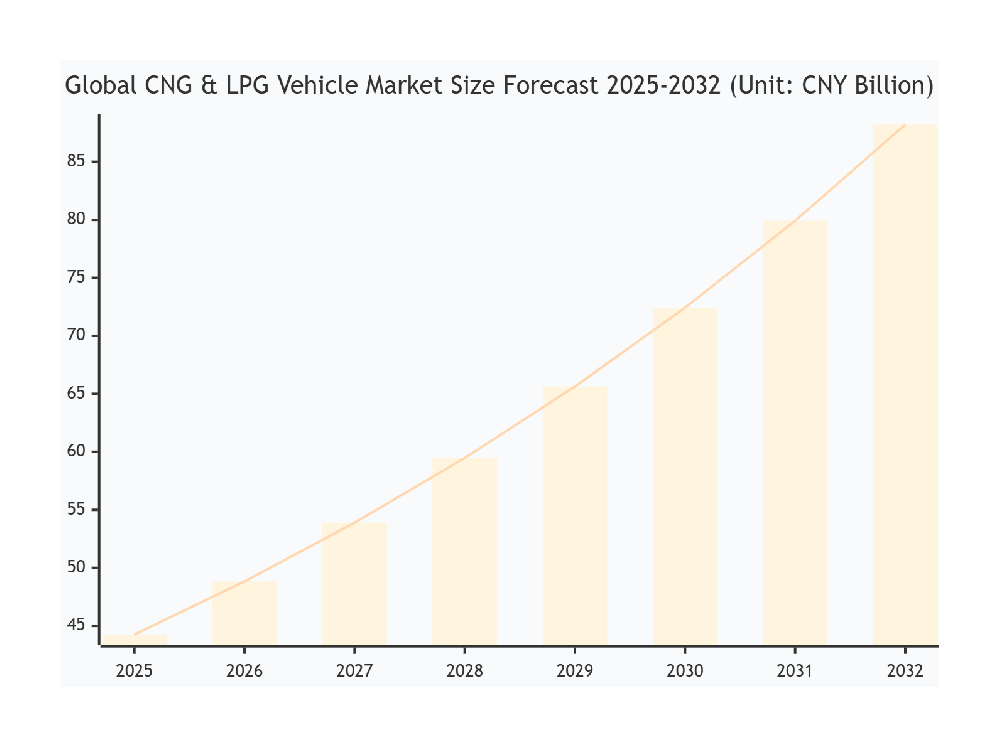
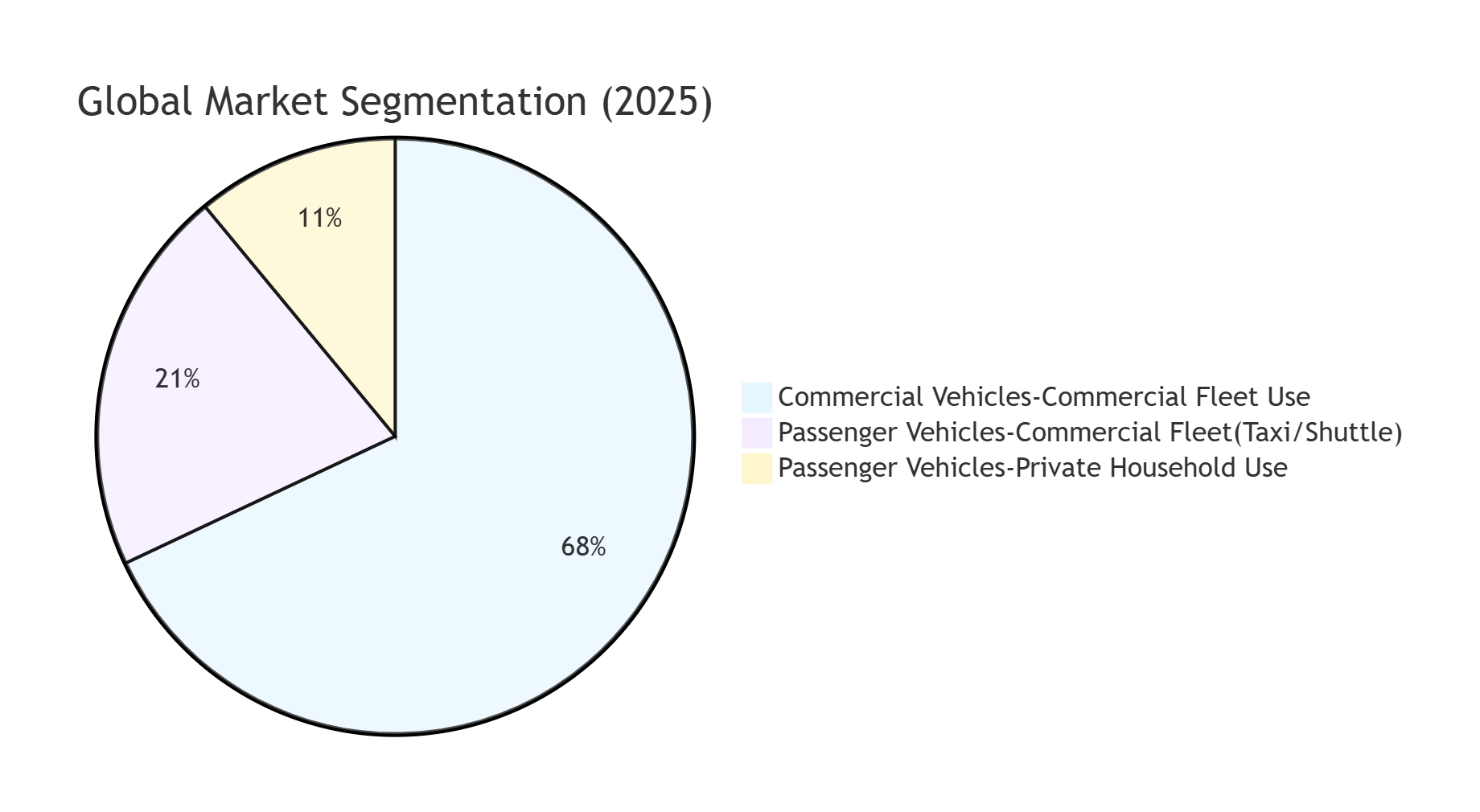
Market segmentation splits into Passenger Vehicles and Commercial Vehicles by product type; end‑use applications are Household/Private Use and Commercial Fleet Operation. Commercial‑use fleets (taxis, public transit, urban distribution, municipal service vehicles) represent the major revenue contributor, while private‑car penetration stays constrained by product drawbacks and retrofit risks.
3. Regional Market Distribution Analysis
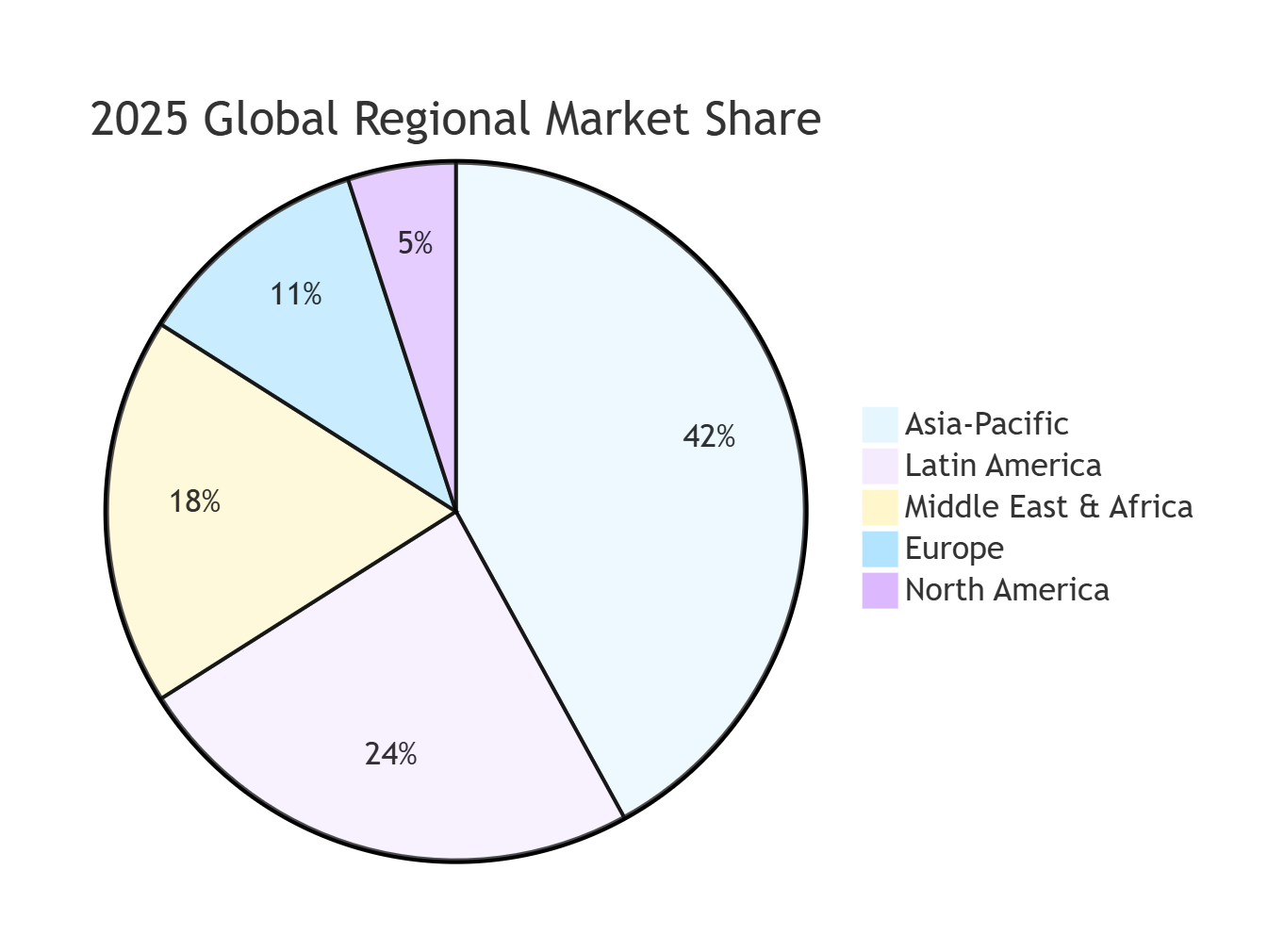
Asia‑Pacific: Largest regional market, driven by China and India. Strong policy support for emission reduction, massive urban public‑transport fleets, and expanding refueling networks. OEM factory‑fitted CNG/LPG models co‑exist with large‑volume aftermarket retrofit businesses in South‑Asia nations.
Latin America: Abundant LPG & CNG fuel resources; taxis and light commercial vehicles constitute core demand. Retrofit workshops are widespread yet fragmented, with uneven safety compliance.
Middle‑East & Africa: Fastest‑growing emerging zone. Limited EV‑charging investment and rich natural‑gas reserves create huge latent demand. However, regulatory fragmentation, shortage of certified retrofit technicians, and prevalence of non‑certified cylinder kits are prominent pain‑points. Many governments launch retrofit‑voucher incentive programs to accelerate fleet conversion, yet informal modification prevails.
Europe & North America: Relatively mature OEM‑dominated market; aftermarket retrofit volume is smaller, subject to strict UN‑ECE R110 and FMVSS‑304 safety homologation rules; unapproved retrofits are legally restricted.
4. Core Market Drivers & Restraints
4.1 Growth‑Driving Forces
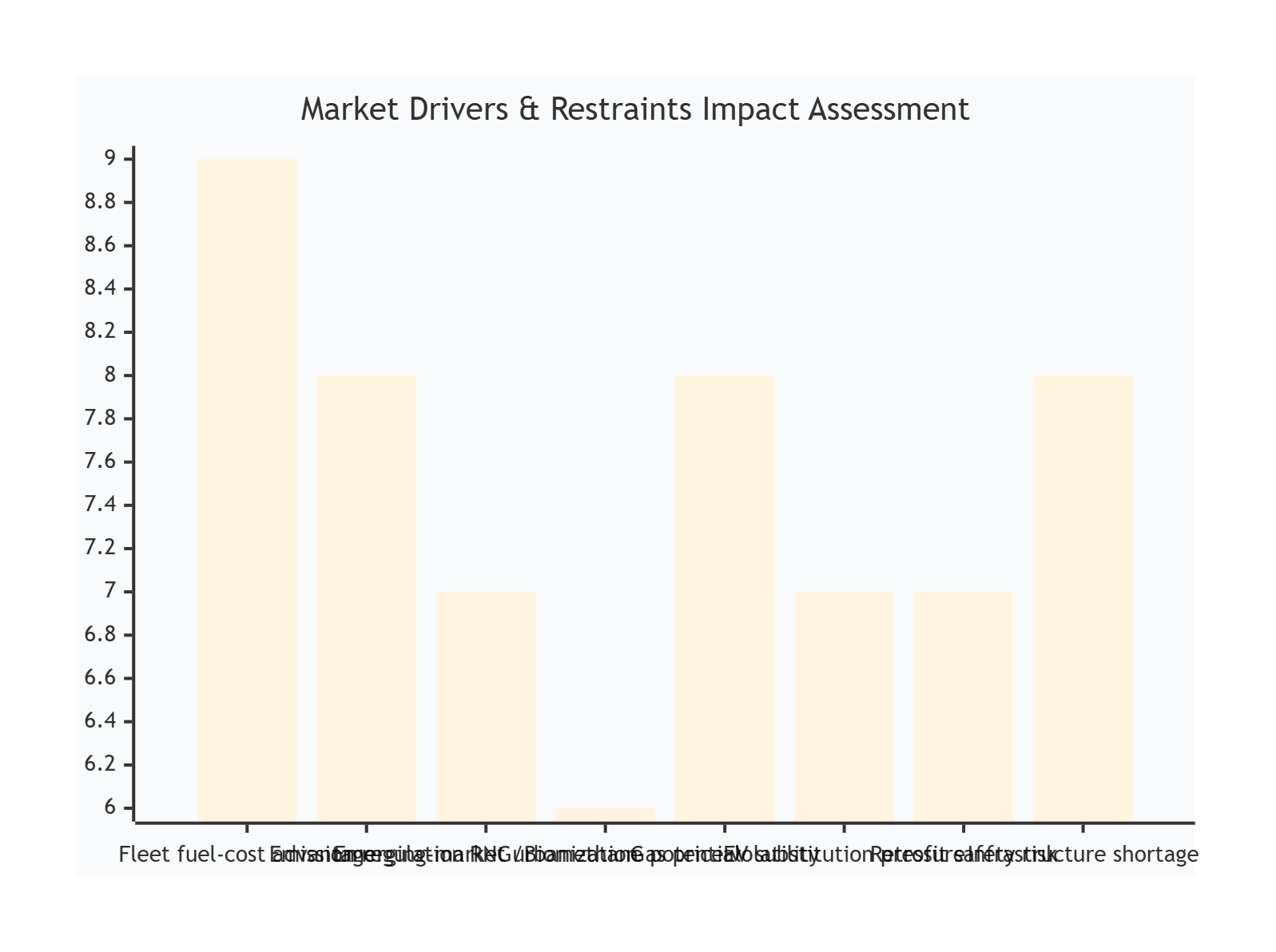
Fleet‑level operating‑cost advantage: Compared with gasoline/diesel, CNG/LPG cuts fuel expenditure for high‑mileage taxis, buses and urban‑delivery fleets, forming the primary driver for both new‑vehicle procurement and aftermarket conversion.
Tightening emission regulations: Natural‑gas combustion generates far lower particulate‑matter and NOₓ output than diesel. Many countries phase‑out old high‑polluting diesel fleets and provide fiscal incentives for gaseous‑fuel adoption.
Expansion of refueling‑station infrastructure: Growing CNG/LPG refuel‑point coverage improves usability. OEMs increasingly launch factory‑integrated products to replace risky informal retrofits.
Emerging‑market urbanization: In Southeast‑Asia, Africa and Latin‑America, building massive EV‑charging networks bears excessive capital costs. Leveraging existing gas pipeline systems makes CNG/LPG a practical transitional mobility option.
New technological opportunities: Renewable RNG / biomethane compatibility, lightweight composite high‑pressure cylinders, gas‑hybrid powertrains, and post‑market inspection & maintenance services create new industrial value pools.
4.2 Market Restraining Factors
Volatile international natural‑gas prices: Geopolitics cause sharp fuel‑price swings, compressing fuel‑cost advantages and lengthening fleet investment payback cycles, pushing potential customers to adopt a wait‑and‑see attitude.
Uneven geographic distribution of refueling infrastructure: Insufficient station density on intercity and remote routes triggers range anxiety and restricts cross‑regional fleet deployment.
Competitive pressure from battery‑electric and fuel‑cell vehicles: Falling battery costs plus government EV subsidies erode market share, especially within urban fleet scenarios.
Vehicle‑product inherent drawbacks: High‑pressure gas tanks occupy cargo/passenger space; CNG vehicle range remains limited; LPG/CNG retrofitted systems require periodic cylinder inspection and replacement, adding lifecycle operating costs. Consumers hold safety concerns toward modified vehicles.
Long‑term carbon‑neutrality policy uncertainty: As many nations prioritize zero‑emission electric/hydrogen roadmaps, policy support for fossil‑based gas mobility weakens, dampening OEM R&D willingness and fleet long‑term purchasing confidence.
5. Deep Dive into Overseas Aftermarket Retrofit Pain‑Points
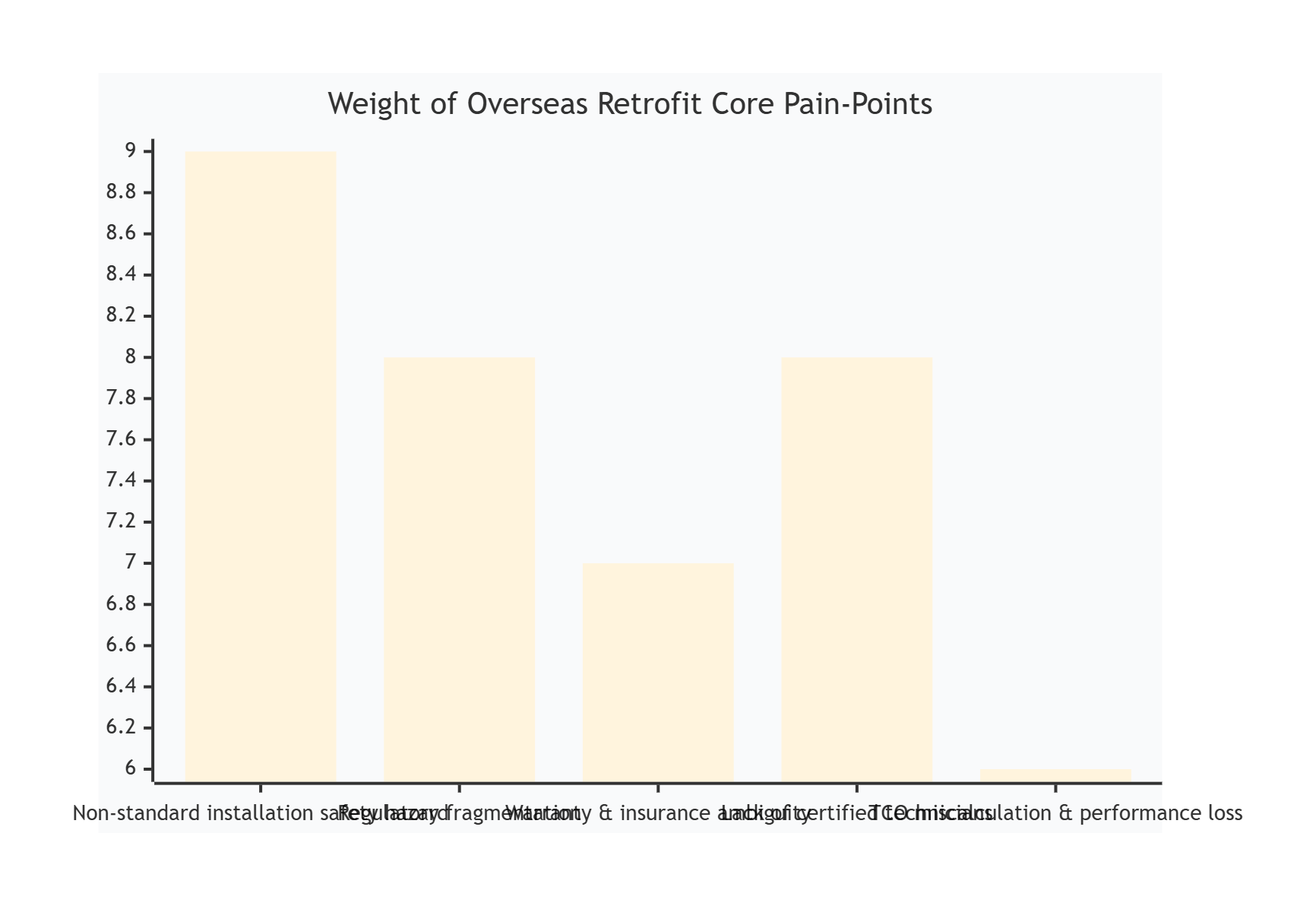
Aftermarket retrofitting converts existing gasoline vehicles into bi‑fuel CNG/LPG vehicles, offering lower upfront capital outlay than purchasing brand‑new OEM gas vehicles. This channel is highly popular across emerging‑market regions, yet it faces five core pain‑points:
5.1 Fragmented, non‑harmonized regional regulatory standards
Different countries apply divergent homologation criteria for retrofit kits, high‑pressure cylinders and post‑modification vehicle road‑worthiness. Some African and Latin‑American jurisdictions lack complete technical codes. Informal workshops deploy uncertified pressure vessels without official type‑approval. Cross‑border fleet operations confront compliance complexity, raising component‑supplier certification expenses.
5.2 Informal‑workshop poor‑quality installation & safety hazards
Unqualified local garages install low‑cost, counterfeit kits: improper pipeline layout, sub‑standard clamping, and defective pressure‑relief components bring gas‑leakage and cylinder‑failure risks. Such safety incidents damage the whole‑industry reputation, even for qualified retrofit solutions.
5.3 New‑vehicle warranty voidance and ambiguous liability boundaries
Aftermarket retrofit typically voids the original OEM vehicle warranty. When engine failure or system malfunction emerges, fleet operators face disputes over liability between vehicle manufacturers, kit suppliers and retrofit workshops. Insurance companies frequently refuse full‑coverage for heavily‑modified vehicles, increasing fleet operational risk exposure.
5.4 Shortage of certified technicians and after‑sales inspection capacity
Retrofit and periodic cylinder‑safety testing demand specially‑trained mechanics. In many emerging‑market territories, certified service networks are sparse. After conversion, regular pressure‑vessel inspection, ECU recalibration and component maintenance cannot be guaranteed, shortening service life for retrofitted vehicles and elevating failure probability.
5.5 Performance degradation after conversion and incomplete total‑cost‑of‑ownership calculation
Poor‑calibrated retrofit kits lead to power‑drop, rough idling and increased engine wear. Many fleet operators only calculate one‑time kit‑installation cost while ignoring recurring expenses including cylinder re‑validation, component replacement and extra maintenance, resulting in worse‑than‑expected actual investment return‑on‑cycle.
6. Strategic Solutions to Resolve Overseas Retrofit Pain‑Points
Targeting above bottlenecks, we propose multi‑dimensional countermeasures for component suppliers, system integrators, fleet operators and local regulators:
6.1 Product side: standardized, region‑adapted certified retrofit kit solution
Develop full‑set kits complying with UN‑ECE R110, ISO 11439 and local national standards; supply traceable certified high‑pressure cylinders, pressure‑regulating valves, ECUs and sensor assemblies; ban export of non‑certified components to high‑risk markets.
Optimize powertrain calibration for local fuel‑quality characteristics (variable methane‑number / LPG composition), mitigate power‑loss and engine‑abrasion issues post‑conversion.
Promote lightweight composite‑material cylinders, to reduce space‑occupation drawbacks of retrofitted vehicles.
6.2 Service‑ecosystem building: authorized retrofit‑and‑inspection partner network
Instead of selling kits to countless unregulated small garages, build an authorized retrofit‑station certification system: train local technicians, grant qualification certificates, standardize installation workflows, and deliver post‑delivery periodic inspection services for high‑pressure tanks. Shift business model from pure‑hardware sales to hardware plus full‑lifecycle service. This addresses the scarcity of competent maintenance resources in emerging markets.
6.3 Business‑model innovation: shared‑risk fleet‑oriented turn‑key contracts
Offer fleet‑focused turn‑key packages: kit supply + authorized installation + multi‑year maintenance + cylinder periodic testing bundled together. Clarify liability scope in contracts, and cooperate with insurance institutions to design dedicated insurance products for retrofitted fleets, resolving warranty‑void and insurance‑coverage pain‑points. For large taxi / public‑transport fleets, adopt pay‑per‑kilometer or fuel‑saving‑sharing commercial models to lower upfront financial pressure for operators.
6.4 Policy & industry‑cooperation advocacy
Component vendors and industry associations should actively engage local regulatory authorities: push for harmonized retrofit‑kit homologation rules, establish mandatory periodic‑inspection regimes for retrofitted gas cylinders, and restrict circulation of counterfeit non‑certified modification parts. Participate in government retrofit‑subsidy / voucher programs to expand formal‑channel market share and squeeze out informal‑workshop market space.
6.5 Gradual transition toward OEM factory‑fitted vehicles
While optimizing the aftermarket retrofit ecosystem, guide large‑scale fleets to shift toward OEM factory‑integrated CNG / LPG bi‑fuel models. Factory‑fitted vehicles feature full‑vehicle crash‑safety verification, complete original‑factory warranty, optimized chassis layout, and eliminate most retrofit‑induced risks. Retrofit should be positioned as a transitional solution for existing legacy‑vehicle parc rather than the long‑term primary pathway.
7. Future Industry Outlook to 2032
Renewable‑gas (RNG / biomethane) will reshape value proposition: Existing CNG/LPG vehicles and refueling infrastructure can directly adopt renewable biomethane. This substantially cuts lifecycle carbon emissions, helps fleets satisfy ESG requirements, and extends the industry lifecycle for gas‑powered vehicles, including retrofitted fleets.
Gas‑hybrid powertrain opens new segmentation track: CNG/LPG hybrid systems improve fuel‑economy and dynamic performance. In regions where large‑scale electrification cannot materialize rapidly, hybrid gas vehicles compete differentially against pure‑EV and conventional‑ICE products, creating new market niches.
After‑market service revenue proportion rises: Huge existing global stock of gas‑fueled commercial fleets drives demand for cylinder testing, engine maintenance, fleet digital management and component renewal. Enterprises will transform from vehicle/kit suppliers into comprehensive mobility‑service providers to enhance customer stickiness and comprehensive profit margin.
Regional divergence will persist: Asia‑Pacific keeps its leading position; Africa, Central‑Asia and parts of Southeast‑Asia represent high‑blue‑ocean markets; mature markets will gradually reduce dependence on aftermarket retrofits and prioritize OEM factory‑fitted gaseous‑fuel and zero‑emission vehicles. Retrofit‑business opportunities will concentrate mainly within emerging‑market economies before 2032.
8. Conclusion
Global CNG & LPG vehicle market maintains solid growth momentum up to 2032, particularly within cost‑sensitive commercial‑fleet segments in emerging economies. The overseas aftermarket retrofit channel satisfies practical market demand, yet safety risks stemming from non‑standard modification, regulatory fragmentation and inadequate service capacity constitute major industry bottlenecks.
Stakeholders must move beyond merely supplying retrofit hardware. Building certified‑product systems, standardized‑installation‑and‑inspection service networks, innovative turn‑key commercial models, plus promoting policy harmonization will unlock the market potential of retrofitted CNG/LPG vehicles, while progressively steering large‑scale fleets toward safer OEM factory‑fitted gaseous‑fuel products. Combined with renewable‑gas and gas‑hybrid technical evolution, the CNG & LPG vehicle sector can deliver valuable transitional clean‑mobility solutions amid the global energy‑transition process.
Disclaimer: Market forecast data are based on existing industry research datasets; actual market performance is subject to geopolitical shifts, fuel‑price volatility, infrastructure‑construction progress and changes in national mobility‑related policies.