Quick Summary: In winter conditions, LPG/CNG reducers often suffer from freezing or delayed switching from petrol to gas. This issue is primarily caused by improper coolant hose taps (such as series routing behind the heater core) or narrow internal reducer water passages that restrict thermal transfer. Fixing coolant line routing to a parallel setup or using heavy-duty wide-pass reducers directly resolves slow warm-up times.
Reddit Driver Experience: Why My LPG Conversion Refused to Switch in Winter
"To be completely honest with you guys, when I first bought my sequential LPG conversion, I loved the savings at the pump, but winter made me hate the car every single morning. I’d be driving for 20 to 25 minutes in sub-zero cold before the ECU would finally decide to switch from petrol to gas. On short commute days, I was basically running 100% petrol anyway, completely defeating the purpose! Worse yet, if I forced the switch early, the reducer would freeze solid into a block of ice and stall the engine."
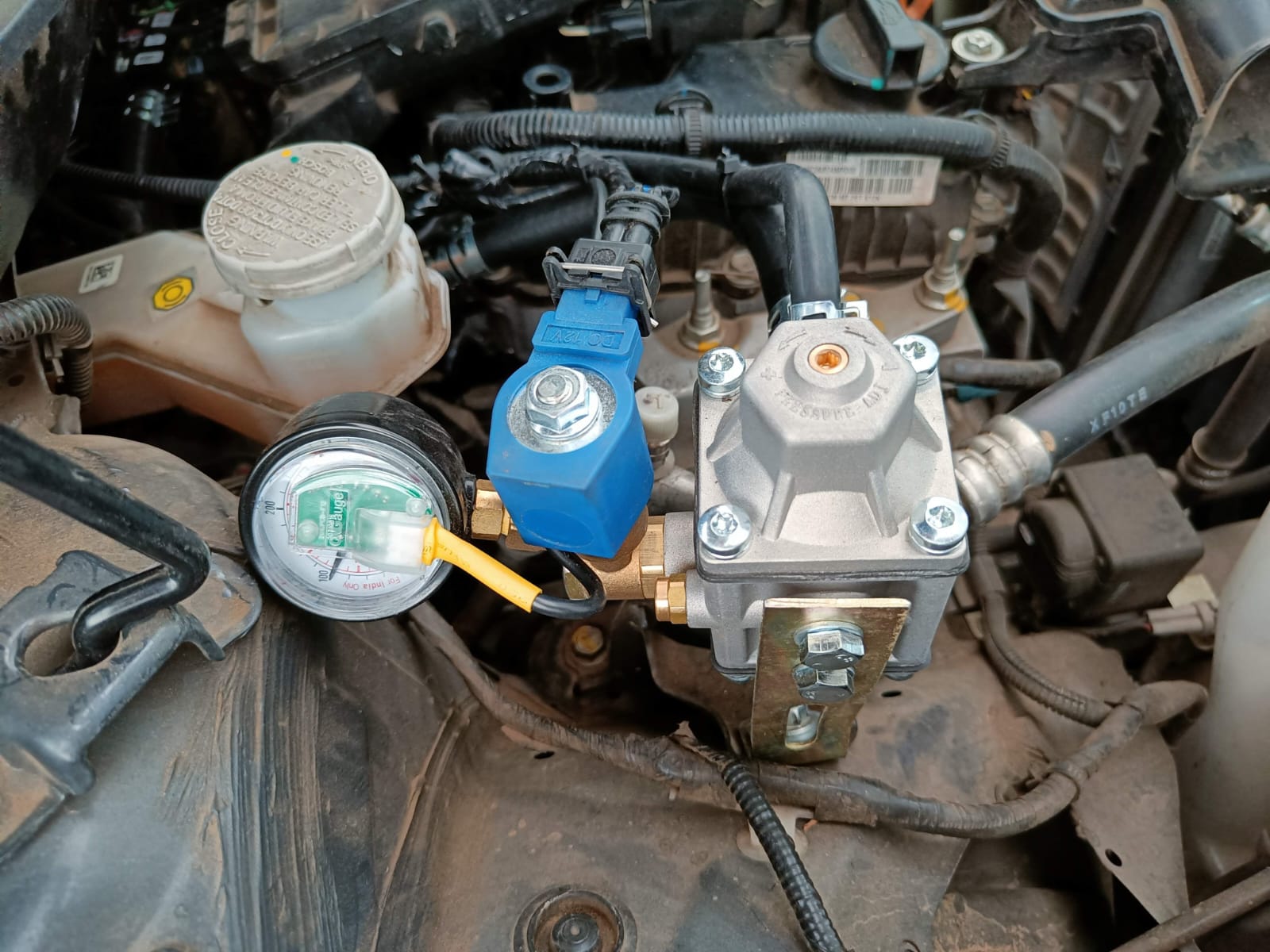
"We eventually pulled the engine bay apart to see what was going on. It turned out to be two huge mistakes: First, the original installer tapped the coolant lines in series way downstream near the heater core, so the reducer was getting almost zero hot coolant flow until the cab heater was cranked all the way up. Second, the cheap aftermarket reducer we had was built with tiny, restrictive internal water paths that clogged up with light scale."
"How we fixed it: We re-routed the coolant hoses in parallel directly off the main thermostat bypass lines to maximize hot water flow rate, replaced the restricted fittings, and swapped to a high-flow water channel reducer (LPG Reducer / Vaporizer). Now the gas temperature sensor hits 40°C in under 3 minutes, and the switch is completely seamless even on freezing mornings."
Why LPG/CNG Reducers Freeze Up: Thermodynamics & Coolant Physics
When compressed natural gas (CNG) expands from 200 bar down to working pressure, or liquefied petroleum gas (LPG) liquid vaporizes into gas, the thermodynamic process absorbs a massive amount of heat (Joule-Thomson effect). Without continuous thermal replenishment from engine coolant, the reducer internal temperature drops rapidly below 0°C, freezing water moisture in the gas and causing mechanical membrane stiffness or complete blockage.
Primary Causes of Reducer Temperature Sensor Delay
Series Hose Connections (Heater Core Delay): When installers tap reducer coolant lines in series with the cabin heater matrix, coolant flow rate drops significantly when the cabin heater control valve opens or closes.
Improper T-Fitting Angles: Using unequal T-pieces or restrictive 90-degree elbows starves the reducer circuit of fluid dynamic pressure.
Restricted Internal Water Channels: Compact reducers often sacrifice coolant chamber volume, resulting in narrow passages prone to coolant scale accumulation and thermal dissipation failure.
Frequently Asked Questions: Winter Reducer Freezing & Slow Switching
Why does my car take so long to switch to LPG or CNG when cold?
Your gas ECU relies on a dedicated temperature sensor embedded in the reducer body (typically set to switch at 35°C–45°C). If coolant fails to circulate properly through the reducer, the metal body stays cold despite the main engine block reaching operating temperature. Re-checking hose routing or choosing a fast-heating unit like the HD05 CNG High Pressure Reducer can ensure optimal heat transfer.
Is it better to plumb the reducer coolant line in series or parallel?
Parallel connection is almost always recommended for autogas systems. Plumbing in parallel ensures that coolant flows through the reducer independently of cabin heater settings, maintaining a steady flow rate and preventing slow fuel switching during cold weather.
What happens if an LPG or CNG reducer freezes completely?
Complete freezing stiffens the internal rubber diaphragm and jams the high-pressure valve seat. This leads to severe pressure spikes or sudden gas starvation, causing engine stalling, misfires, or ECU system switching error faults.
How can I upgrade my gas conversion kit for severe winter conditions?
Ensure your installation utilizes full-bore brass T-connectors, high-grade silicon coolant hoses, and an OEM-quality gas control system. Pairing a reliable heat-exchanger reducer with high-precision injectors—such as those in a complete CNG/LPG Sequential Conversion Kit—ensures fast cold start warm-ups and stable fuel switching in sub-zero climates.