Products Description
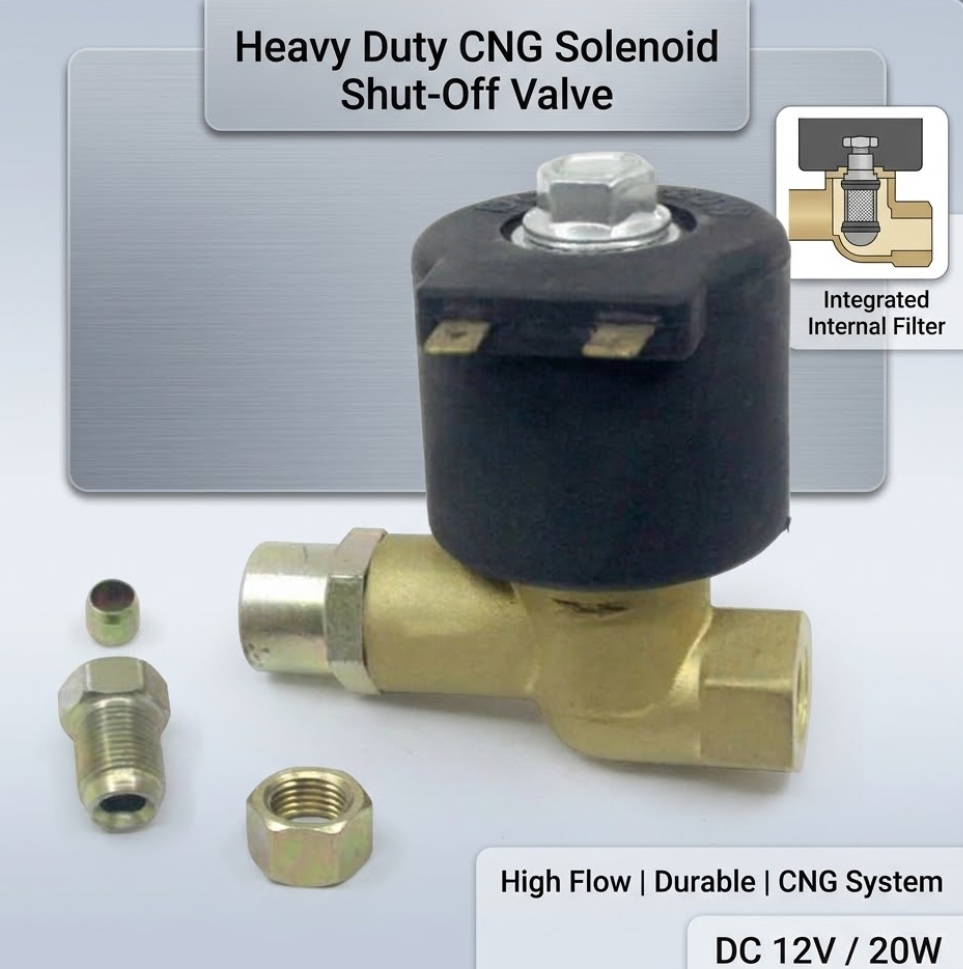
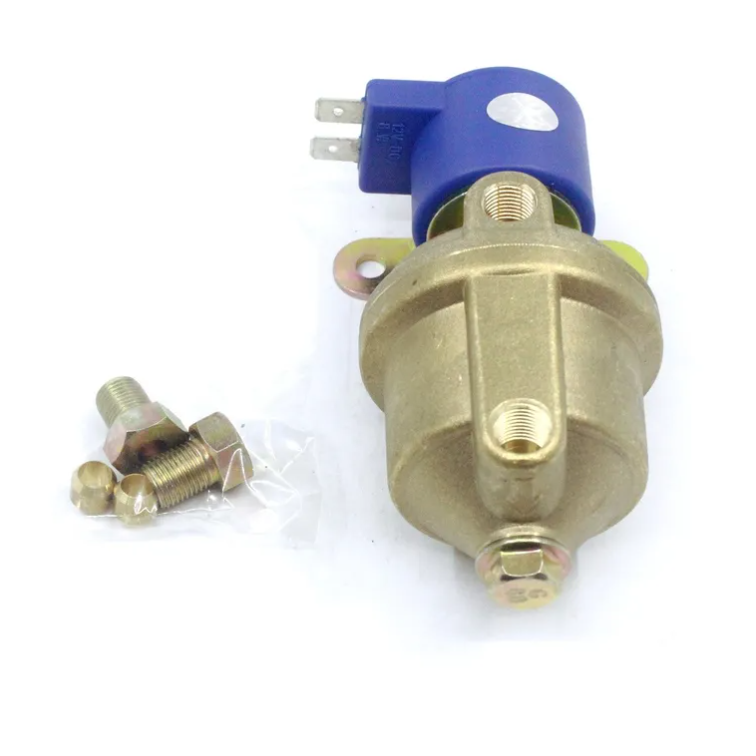
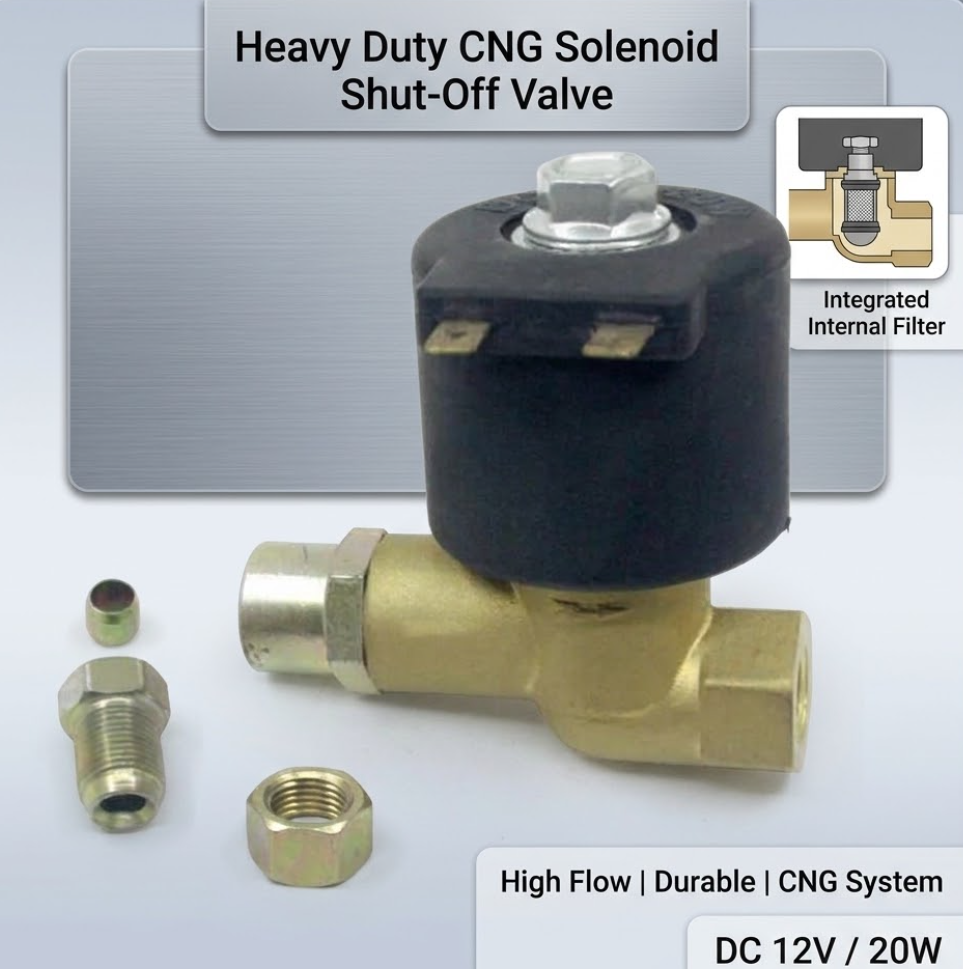
Fuel System High Pressure CNG Shut Off Valve 20MPa
This 20MPa high-pressure CNG shut-off valve is a crucial safety and operational component in modern autogas fuel systems. Built as a heavy-duty solenoid valve with a naturally integrated filter, it serves to manage high-pressure natural gas before it enters sensitive vehicle components.
The CNG cut-off valve is a high pressure solenoid valve with integrated filter. Its primary function is to prevent gas flow when the system is inactive and to provide a clean fuel stream to the CNG reducer, thus ensuring optimal system performance and component longevity.
Technical Specifications
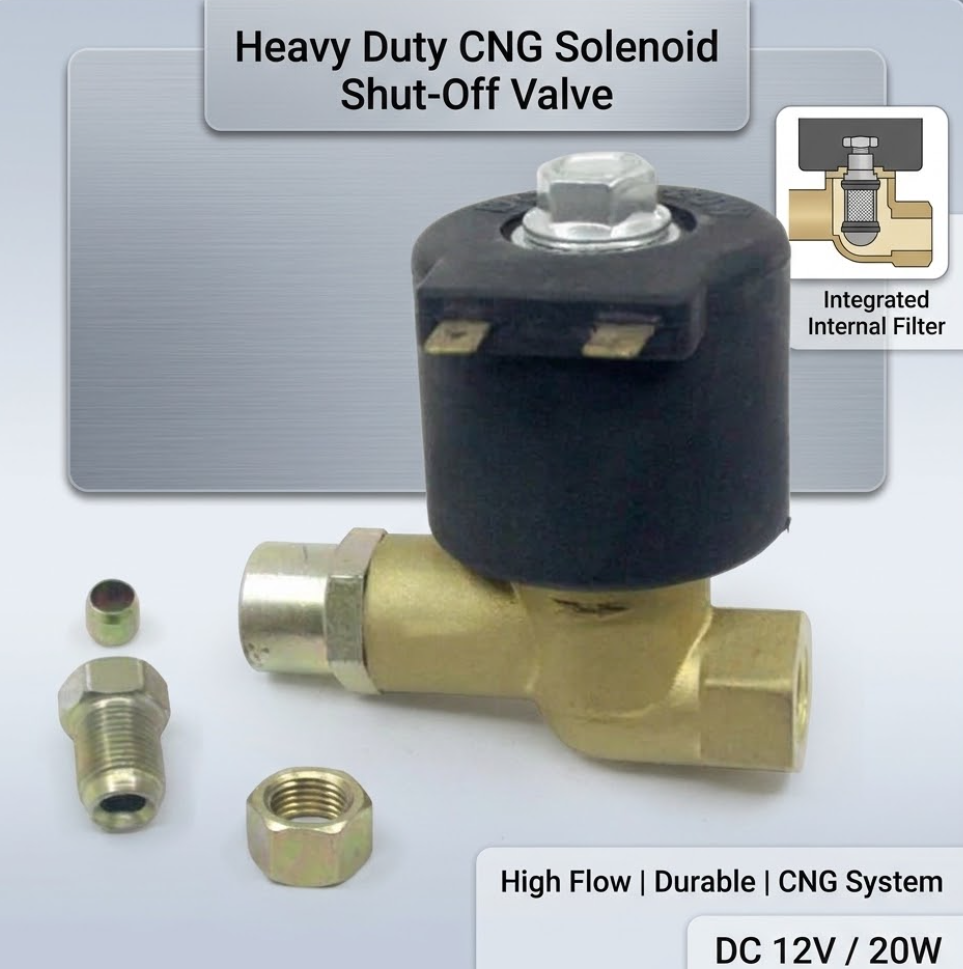
| Parameter | Specification Value |
|---|---|
| Fuel type | Compressed Natural Gas (CNG) |
| Working pressure | 20MPa (approx. 2900 psi) |
| Pipe connection | M12x1 for φ 6mm Pipe |
| Working temperature | -40 to 120 °C |
| Coil voltage | DC 12V |
| Coil power | 20W |
Core Functions and System Placement
Prevent Down-Stream Contamination
The common challenge of high-pressure CNG is the carriage of fine metallic particles and oil deposits from the filling station. Our valve addresses this directly with an integrated high-efficiency filter. This crucial feature filters particulate matter before it can jam the internal piston of the valve or cause premature wear in the CNG pressure regulator.
Secure Fuel Cut-off
Operating directly on a DC 12V coil (20W power), this valve acts as the system's safe guardian. When the vehicle ignition is off or switches from gas to petrol, the solenoid instantly cuts the high-pressure gas path, preventing leakage and ensuring that the high-pressure side of the CNG fuel system remains sealed.
Optimized Position for Efficiency
For maximum system efficiency and rapid response times, the valve is installed between the CNG cylinder valve and the CNG reducer, ideally positioned close to the CNG reducer as much as possible. This location minimizes the length of unfiltered, high-pressure piping, maximizing the filter's effect and the solenoid's response.
Frequently Asked Questions (FAQ)
Q: What are the symptoms of a failing or clogged CNG high-pressure shut-off valve?
A: The most common symptom is a vehicle that fails to switch from petrol to CNG, or a vehicle that stalls when gas pressure is needed, suggesting a blockage or a coil that is not energizing. A loud clicking sound without fuel delivery often indicates a faulty solenoid coil, while poor acceleration can signal a clogged filter limiting flow.
Q: How often should the integrated CNG valve filter be replaced?
A: To prevent pressure drop and protect the reducer, the integrated filter should be inspected or replaced every 15,000 to 20,000 kilometers, or according to your conversion kit's maintenance schedule, depending on the typical fuel quality at your filling stations.
Q: Can this 20MPa valve be used on an LPG system?
A: No. While this valve is built for 20MPa, LPG systems operate at much lower pressures. Using a CNG valve on an LPG system can lead to serious performance issues because the valve's internal mechanism and seal material are not designed to manage the specific flow and chemical properties of LPG. Always use components designed for the correct autogas fuel type.
Q: Does this valve require any specific tools for installation on 6mm pipe?
A: Standard flare nuts and flaring tools suitable for automotive brake or fuel lines will be required for the M12x1 connection on 6mm rigid metal piping. Ensure all connections are leak-tested under full system pressure (up to 20MPa).