1. Basic Introduction & Industry Standards
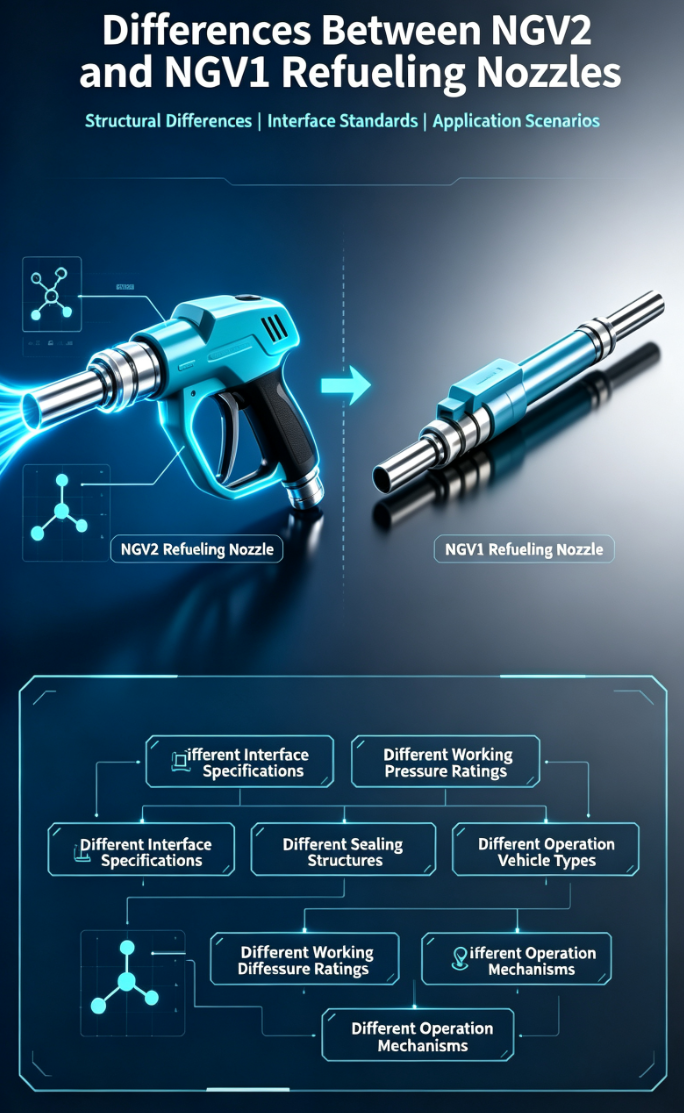
NGV1 and NGV2 are two global standard fuel gun interfaces for CNG gas vehicles. Gas stations and car fuel ports use these two standards to match fuel nozzles.
NGV1: Follows CSA/ANSI NGV1 standard. Made for small passenger cars.
NGV2: Follows ISO 14469 global standard. Built for big heavy commercial trucks.
Key Core Difference: They use different standards and different pipe sizes. NGV1 inner pipe size is 8mm. NGV2 inner pipe size is 12mm. NGV2 fills gas twice as fast as NGV1. The two fuel guns cannot connect to each other’s car ports. They are 100% incompatible.
2. 4 Main Comparison Points Between NGV1 & NGV2
2.1 Suitable Vehicles & Usage Scenarios
NGV1 Fuel Nozzle
For light civilian vehicles with small gas cylinders
Work for private cars, taxis, small vans, light pickup trucks
Installed at regular public CNG stations
Supports self-service and manual refueling
The most common nozzle for private modified gas cars
NGV2 Fuel Nozzle
Designed for heavy commercial vehicles with large gas tanks
For city buses, heavy cargo trucks, large logistics vehicles
Mainly used in bus depots and heavy-truck-only gas stations
Meets fast, high-volume refuel demands for daily commercial transport
2.2 Size & Gas Flow Performance
NGV1 Fuel Nozzle
Small, light body with narrow internal gas channel
Standard inner pipe diameter: 8mm (DN6)
Slow to medium filling speed for small car gas tanks
No loud noise or heavy pressure loss during refueling
NGV2 Fuel Nozzle
Thicker, bigger nozzle and matching car fuel port
Wide internal gas pipe, diameter 12mm (DN10~DN14)
Gas filling speed is double NGV1’s speed
Perfect for big gas tanks on buses and heavy trucks
Cuts refuel time for commercial fleets; avoids noise and pressure drop
2.3 Shape & Operation Method
NGV1 Fuel Nozzle
Looks like standard gasoline station fuel guns
Light weight, simple structure, easy to carry
One-hand operation: slide sleeve + hand claw lock
Simple spring buckle lock for low-frequency civilian refueling
NGV2 Fuel Nozzle
Heavy-duty industrial build: scratch-proof, impact-resistant
Strong push-lock claw for stable connection under high pressure
Optimized lock design prevents accidental drop-off during high-pressure refueling
New generation NGV2 fixes loose lock problems from old versions
2.4 Port Compatibility & Market Use Rate
Compatibility: Fully Not Interchangeable
NGV1 and NGV2 fuel guns + car ports have different sizes, shapes and lock parts. You cannot plug an NGV1 nozzle into an NGV2 car port, and vice versa. Mixing the two standards will cause high-pressure safety risks.
Market Popularity
NGV1: Top choice for civilian gas stations. Fits all early modified private cars and taxi fleets.
NGV2: Specialized for commercial vehicles. Standard fuel gun for all heavy-duty CNG trucks and buses.
3. Shared Internal Valve Structure Details
NGV1 and NGV2 share the same working logic: push the nozzle into the port to open the internal valve core.
The only differences:
NGV2 uses a wider pipe with larger pressure-bearing surface
NGV2 has upgraded sealing rings built for continuous high-pressure work
NGV2 offers tighter sealing and higher pressure resistance
4. Quick Summary of All NGV1 & NGV2 Differences
Different Standards: NGV1 = US CSA/ANSI standard; NGV2 = global ISO 14469 standard
Different Flow Speed: NGV2 pipe size and filling speed are twice NGV1’s
Different Matched Vehicles: NGV1 for small light cars; NGV2 for heavy commercial trucks & buses
Different Body Structure: NGV1 light & simple; NGV2 reinforced heavy build with safer high-pressure lock
Zero Cross Compatibility: No way to connect NGV1 and NGV2 parts; each vehicle needs its matching nozzle
Frequently Asked Questions (FAQ)
Q1: What is the main difference between NGV1 and NGV2 CNG fuel nozzles?
A: The biggest gaps are industry standards and pipe sizes. NGV1 follows US standard for small cars with an 8mm pipe. NGV2 follows global ISO standard for heavy trucks with a 12mm pipe. NGV2 fills gas twice as fast, and the two nozzles cannot work with each other’s ports.
Q2: Can I use NGV1 and NGV2 fuel nozzles interchangeably?
A: No, you cannot. The two fuel guns and vehicle ports have totally different sizes, shapes and lock systems. They physically cannot connect. Using mismatched nozzles creates serious high-pressure safety dangers.
Q3: What types of vehicles use NGV2 refuel nozzles?
A: NGV2 fuel nozzles are built for vehicles with large CNG gas tanks and frequent refueling. They mainly serve city buses, heavy cargo trucks and large logistics transport vehicles.