Natural gas is safer than petrol because it needs a higher temperature and a suitable concentration before it will ignite. It is also a non-toxic, non-carcinogenic, and non-corrosive gas. Because it is lighter than air, a leak tends to disperse rather than pool. These properties are why many countries have treated the development of natural gas vehicles as an important way to reduce air pollution. A related discussion of conversion benefits on cars is given in Pros and Cons of Converting Gasoline-Powered Cars to CNG.
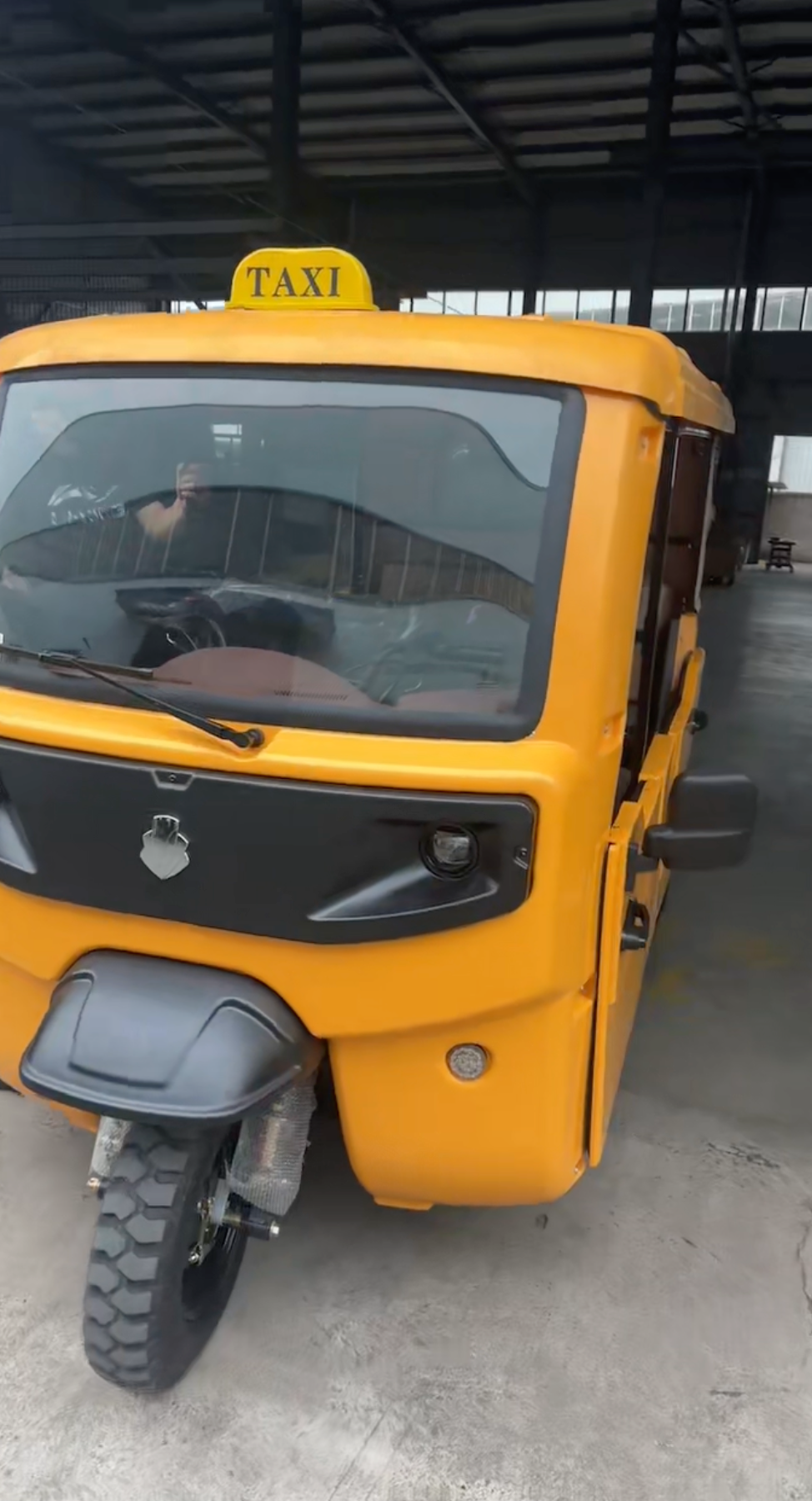
How much can a CNG motorcycle reduce fuel cost and emissions?
Using CNG as a vehicle fuel can greatly reduce fuel expense. On the stated equivalence of 1 m³ of natural gas to 1.1 liters of petrol, fuel cost can fall by more than 50%. At the same time, exhaust pollution is much lower than with petrol: no sulfides or lead, carbon monoxide down 80%, hydrocarbons down 60%, and nitrogen oxides down 70%.
What are the disadvantages of a CNG motorcycle?
The limits come mainly from the way compressed natural gas is stored and from the fact that most CNG motorcycles are still petrol engines with a gas system added, not engines designed only for CNG.
Why is the driving range shorter on CNG?
Compressed natural gas has a low energy density in storage. For a storage container of the same volume, the driving range is only about one-quarter of the range on petrol. The storage container is also heavy, so the vehicle’s curb weight increases. On a small vehicle, the design has to consider the limit on added weight and the limited space, so too many natural gas cylinders cannot be installed, and the driving range on natural gas is relatively short.
Why does a CNG motorcycle lose some power?
Current CNG vehicles are generally dual-fuel vehicles made by adding a CNG system to a petrol vehicle. The engine compression ratio, ignition system, and intake system are left unchanged, so the performance of natural gas is not fully used.
The theoretical air–fuel ratio of natural gas is 10:1. When natural gas enters the engine, it occupies about 10% of the volume, which reduces the amount of air drawn into the engine by about 10%. Intake efficiency falls, and power falls as a result. Natural gas is also chemically stable, burns slowly, and needs more energy to ignite. Compared with petrol, power on CNG falls by about 5–15%. If a converted vehicle vibrates or feels weak when accelerating, see the troubleshooting note on CNG converted vehicles that vibrate and lack power on acceleration.
What other limits should you expect?
The natural gas cylinder takes up space that would otherwise be used for other purposes, such as luggage space or a toolbox. The cylinder is also filled at a high pressure. If gas leaks, the risk is substantial, and incorrect operation can create a risk of explosion. These points should be considered together with correct installation of the motorcycle CNG conversion kit and the CNG motorcycle reducer.
Is a dual-fuel CNG motorcycle still a practical choice?
The disadvantages above are real, especially the shorter range, the added cylinder weight, the 5–15% power drop, and the space taken by the cylinder. At the same time, the fuel-cost reduction of more than 50%, the lower emissions, and the fuel-property safety margins remain the main reasons workshops and riders convert petrol motorcycles and tricycles.
International oil supply is tight and prices have been rising. Because CNG vehicles are comparatively safe, economical, and environmentally friendly, and because the fuel price is relatively stable, many countries are actively promoting the CNG vehicle industry. CNG vehicles still have a broad market outlook. For the conversion method itself, see Can Motorcycles Be Converted to CNG or LPG? A comparison of the two fuels on vehicles is also available in the CNG vs LPG vehicles conversion guide.
Frequently asked questions about CNG motorcycle pros and cons
Is a CNG motorcycle safe?
Natural gas is harder to ignite than petrol because its ignition temperature is 650°C or above, compared with 427°C for petrol. It is non-toxic, non-carcinogenic, and non-corrosive. Its relative density versus air is 0.48, so a leak disperses quickly, and its explosive limits are a narrow 5–15%. When compressed natural gas escapes from a container or a line, the release is endothermic and a low-temperature zone forms around the opening, which makes ignition more difficult. At the same time, the cylinder is filled at a high pressure. A leak still carries a substantial risk, and incorrect operation can create a risk of explosion. Safe use depends on correct installation, secure cylinder mounting, and correct operation of the valves and switch.
How much range does a CNG motorcycle lose compared with petrol?
For a storage container of the same volume, the driving range on compressed natural gas is only about one-quarter of the range on petrol. The cylinder is also heavy, which increases the vehicle weight. On a small motorcycle or tricycle, space and weight limits mean that extra cylinders usually cannot be added, so the range on natural gas is relatively short. This is why a dual-fuel layout, which keeps the original petrol system, remains useful when the gas supply is used up.
Does a CNG motorcycle lose power?
Yes. Most CNG motorcycles are petrol engines with a CNG system added, and the compression ratio, ignition system, and intake system are not changed. Natural gas occupies about 10% of the intake volume, which reduces the amount of air entering the engine by about 10%. Natural gas also burns slowly and needs more energy to ignite. Compared with petrol, power on CNG falls by about 5–15%.